


If you have ever stepped into a shower that felt weak, you probably tried to fix it fast. Most people start with the shower head, because it is the only part you can see and swap in minutes. That’s also why searches like shower flow rate show up so often. But the number on a product label does not always match what you feel at home. In real bathrooms, the valve and the system upstream often decide whether the water feels steady, full, and comfortable.
That difference often comes from what happens upstream. The valve, the pipe layout, and the way the system splits water matter more than many people think. Once you see that, it becomes easier to diagnose problems and plan a shower that stays comfortable over time.
What Does “Shower Flow Rate” Actually Mean?
Shower flow rate is simply how much water comes out per unit of time. You will usually see it listed as gallons per minute (GPM) or liters per minute (LPM). It is an output measure, not a guarantee of comfort.
A common mistake is treating flow rate as the same thing as pressure. They are connected, but they are not the same. Pressure is the force pushing water through the system. Flow is the amount that actually gets through. You can have good pressure and still end up with disappointing flow if the system has restrictions.
This is why shower head flow rate labels can be confusing. The number describes a test condition. Your home may not match that condition. Real bathrooms add pipe runs, fittings, valves, and sometimes multiple outlets that change how the water behaves.
What Is Considered a Good Flow Rate for a Shower Head?
So, what is a good flow rate for a shower head in normal home use? Many households land in a range that feels comfortable without being wasteful. That range is often close to what people call the average shower flow rate, but the “right” number still depends on your goals and your setup.
A useful way to think about it is this: “good” is the point where the spray feels full and consistent, and you do not have to fight the temperature when someone else uses water in the house. If a shower feels thin, it may not be because the flow number is low. It may be because the system cannot deliver a stable flow under real conditions.
If you compare the average flow rate for shower head figures across products, you will notice that many options cluster together. That is exactly why you should not treat the label as the whole story. The experience comes from the system, not from a single component.
Why the Same Flow Rate Can Feel Very Different
People often ask why two showers with similar shower head flow rates feel nothing alike. The reasons are usually practical, not mysterious.
One reason is the restriction before the shower head. A valve with a tight internal pathway can reduce what reaches the head. Another is long or complex piping. More turns and fittings can create more loss. The third reason is splitting the flow between outlets. If the system is feeding a hand shower, a tub spout, or other functions, the available flow may shift depending on how the valve routes water.
In short, the shower head is only the final nozzle. The system decides what gets delivered to that nozzle.
Why Flow Rate Alone Doesn’t Define Shower Comfort
Shower comfort is more than a single shower flow rate number. Comfort is about stability. It is about how steady the stream feels. It is about how predictable the temperature is when you adjust the handle. And it is about whether switching between functions changes the experience in a frustrating way.
If you are chasing a better shower by swapping heads, it can help to step back and look at what controls the water earlier in the system. In many bathrooms, upstream choices matter more than the spray plate. This is the same principle that shows up in other fixtures too, as explained in why a floor-mounted bath mixer matters in real bathrooms.
The Role of the Shower Valve in Flow Control
A shower valve is not only a temperature tool. It is also a flow tool. It sets how much water can pass, how smoothly it can be adjusted, and how that water gets directed to different outlets. That is why the valve can influence real-world shower flow rate even when the shower head stays the same.
Valve design matters because it shapes internal resistance. It also shapes how stable the system feels when conditions change. If someone flushes a toilet, or a washing machine kicks on, the valve and the system design help determine whether your shower feels steady or suddenly unpredictable.
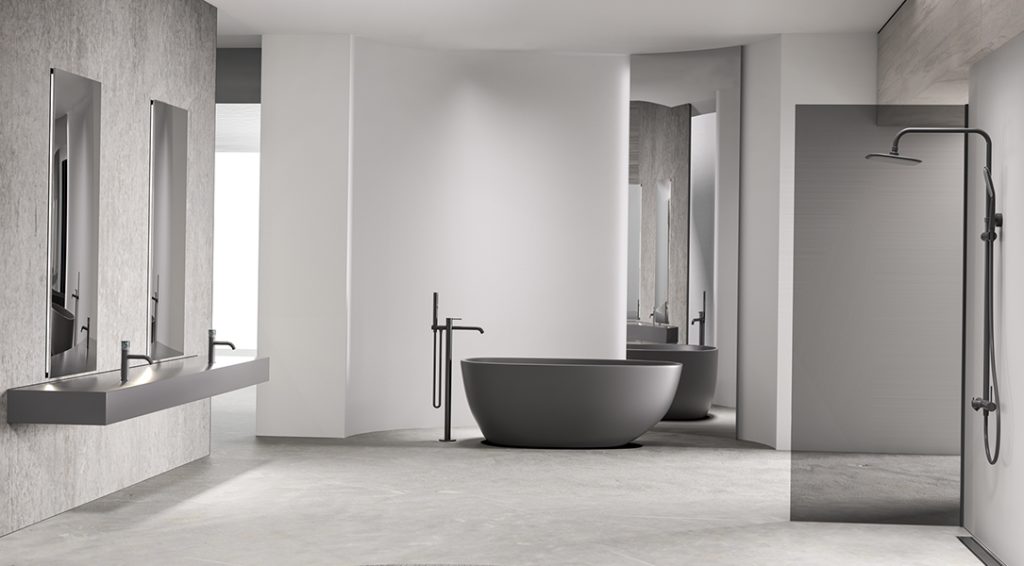
For a floor-standing setup, a floor-standing shower bath mixer with a concealed box helps manage flow and switching behavior before the water ever reaches the shower head.
Why the Valve Matters More Than the Number
Now the main point becomes clear. Flow rate labels are a snapshot. The valve is the control center.
If a valve routes water smoothly and consistently, the shower can feel better even at a modest flow. If a valve struggles to manage routing or stability, the shower can feel worse even if the head is rated for a higher number.
This is also why choosing a high-flow rate shower head alone does not always solve a weak shower. If the valve and upstream layout cannot support that flow, the experience may not change much. In some cases, it can even feel more erratic because the system is operating closer to its limits.
Shower Flow Rate in Multi-Outlet Shower Systems
Multi-outlet showers are where the “valve first” mindset really pays off. If your setup includes a hand shower and a spout, or you switch between functions often, the system must do more than mix hot and cold. It must distribute flow in a predictable way.
In real bathrooms, people notice problems like these:
- The shower feels fine, but the moment you switch outlets, the flow drops sharply.
- The spray gets thin when another outlet is used.
- Temperature shifts when switching functions.
These problems are not solved by reading shower head flow rate labels. They are solved by system planning and valve behavior. In this kind of setup, a concealed installation approach can also help keep the layout clean while supporting stable routing.
Water Pressure, Pipe Size, and Valve — How They Work Together
Pressure, pipe size, and valve behavior work as a set. Pressure is the push. Pipe size is the pathway. The valve is the gate and the traffic controller.
If the pipe size is too small, the system can feel restricted. If pressure is inconsistent, the shower can swing. If the valve adds too much resistance, you may never reach the flow you expected, no matter what the shower head claims.
This is why “good” flow is not just a number. It is the result of a well-matched system.
Choosing a Shower System Based on Flow, Not Just the Shower Head
If your shower feels weak, start with a simple check. Is the issue constant, or only during peak use? Does it change when you switch outlets? Does it improve when other fixtures are off? These clues tell you whether the shower head is the limiting factor or the system is.
If the problem follows switching, routing, or stability, it is time to look at the valve and layout. That is where the most reliable upgrades usually happen.
ITAVA Floor-Standing Shower Systems and Flow Control
ITAVA focuses on clean, modern bathroom hardware that supports real daily use. In floor-standing configurations, the system design and concealed installation can help keep the space minimalist while addressing flow stability and outlet switching. If you are planning a layout that depends on consistent performance, it helps to think in system terms instead of chasing a single label.
FAQ
Q1: What is a good flow rate for a shower head?
A: A good flow rate is one that feels full and steady in your home, not just in a test. Many setups fall near the average range, but the valve and system layout often decide how it feels day to day.
Q2: Why does my shower feel weak even if the shower head flow rate seems normal?
A: Upstream restrictions can reduce what reaches the head. The valve, pipe runs, fittings, and multi-outlet routing can all affect real flow.
Q3: Does the shower valve affect the shower flow rate?
A: Yes. Valve design can add resistance and can shape how smoothly flow is adjusted and routed, especially when conditions change.
Q4: How does a concealed shower valve impact water flow?
A: Concealed installations can support a cleaner layout. The key factor is still the valve’s internal design and how it manages routing and stability in the system.
Q5: Is flow rate or valve design more important for shower comfort?
A: Flow rate matters, but valve design often matters more for comfort. A stable, well-matched valve and layout can make the shower feel better even without chasing the highest number.