

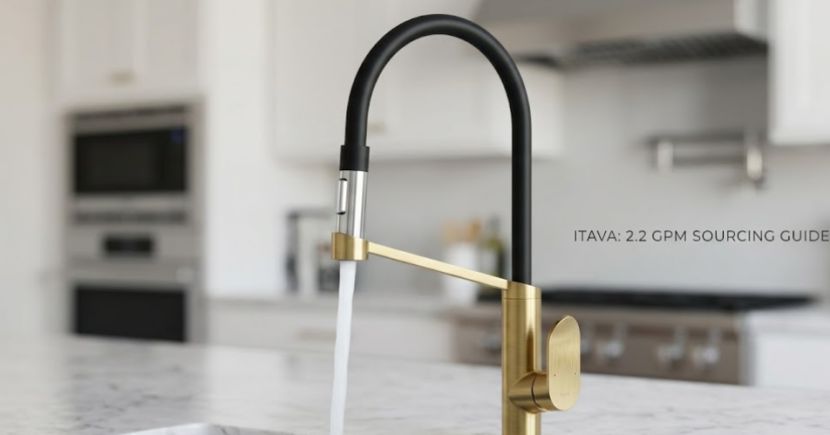
When you see kitchen faucet 2.2 GPM on a spec sheet, it is more than just a water number. It represents a real buying choice. For kitchen faucet sourcing in the U.S., this number changes a lot of things. It impacts rules, project plans, and store sales. It also shapes the gripes you might get from plumbers or home buyers later on. If a flow rate does not fit a certain market, the item might feel too weak. It could fail an inspection. Sometimes, it just misses the local rules entirely. The official U.S. guide states the top federal limit for kitchen faucets is 2.2 gallons per minute at 60 psi. However, some states want a lower starting flow.
Are you looking for good suppliers? ITAVA fits this talk perfectly. Their website shows them as a worldwide customized kitchen and bathroom supplier. They care about design, good quality, full room setups, and custom work. This matters a ton in B2B jobs. Why? Because you almost never buy a tap just for its looks. You buy it to match your sales plan. You check the specs, color choices, and how easily you can order it again. For kitchens, one popular single lever mixer has a brass main body. It uses a single hole setup and a 50 cm stainless steel hose. Plus, you can pick colors like chrome, brush gold, gun metal, chrome black, brush champagne gold, and brush rose gold. Buyers love seeing lists like this. It helps when a single catalog needs to work in many different places at the same time.
What Does 2.2 GPM Mean for a Kitchen Faucet?
This tiny number seems very simple. But in real life, it answers two distinct questions. First, how much water does the tap push out in one minute? Next, how was that test actually done? Both points mean a great deal. A tap can feel strong when you use it. At the same time, it can still hold a strict flow rate on paper. Because of this, you should never read a kitchen faucet flow rate all by itself.
GPM Measures Volume, Not the Whole Experience
Simply put, GPM stands for gallons per minute. So, what does 2.2 GPM mean for kitchen faucets? It means the tap is built to push out up to 2.2 gallons of water each minute during the test. This stat will not tell you the whole story. You will not know the rinsing feel, the spray shape, or if it feels nice to use. Still, this is the very first number buyers look at.
60 PSI Is Part of the Spec
You need to talk about water pressure, too. Using a kitchen faucet flow rate 60 psi note lets you compare items fairly. The U.S. uses 60 psi as its main federal standard. What if a factory gives you a flow number but no test pressure? Then that spec sheet is far from complete.
Is 2.2 GPM a Legal Limit or Just a Market Convention?
Here is where buying talks can get mixed up. Some buyers think 2.2 GPM is just a common habit. It is actually much more exact than that. In the U.S. market, this rule begins as a hard limit by the federal government. Then, it gets even stricter in some local towns.
The Federal Baseline Matters
When we look at U.S. kitchen faucet regulations, the main rule is clear. The federal kitchen faucet flow limit is 2.2 gpm or less at 60 psi. So, if you ever wonder, is 2.2 GPM the legal limit for kitchen faucets? At the federal level, yes it is. Folks also get confused about something else. There is no special WaterSense label just for kitchen taps. Many buyers wrongly think there is one.
Some States Go Lower
Some states and towns make harder rules. Take California as an example. Home taps there usually stick to 1.8 gpm at 60 psi. They do allow a short burst of up to 2.2 gpm to fill big pots quickly. But, the tap has to drop back down to the lower flow after you turn it off. This single change is a big deal. It decides if one product code works for every store, or if you need special types for different areas.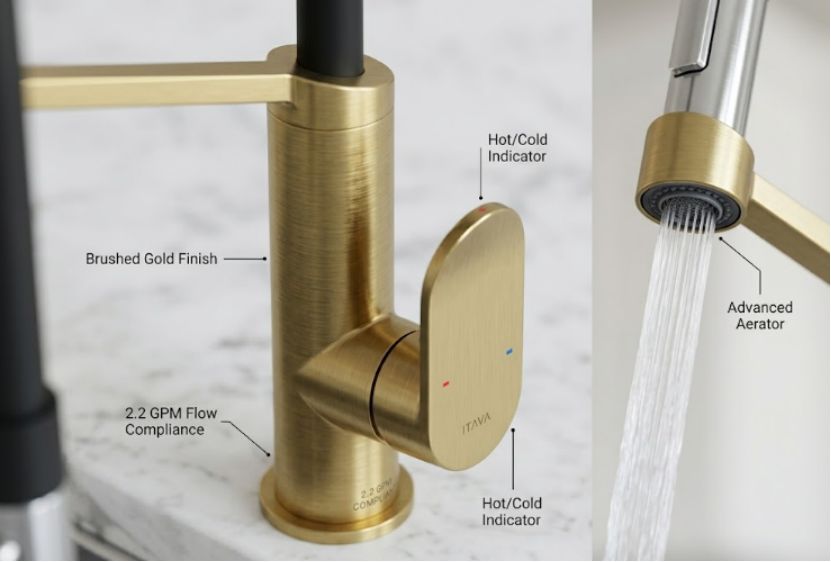
Why Does 2.2 GPM Matter to Buyers?
For importers, shops, and project teams, this flow rate is a big deal. It changes how you do paperwork. It alters how you pick your items. Honestly, it also impacts how happy people are after buying. A tap that fails to match a certain market will cause a flood of angry emails. Nobody wants that.
Compliance, Complaints, and Channel Fit
Kitchen faucet compliance is the first test you must pass. Next up is how users feel. The wrong kitchen faucet flow rate causes slow pot filling in one place. In another spot, your product might get banned from shelves. Pro buying guides note that small parts, like aerators, change the flow. They can set taps to 1.5, 1.8, or 2.2 GPM. That is why exact details are super important for wholesale and OEM jobs. When a kitchen faucet gets returned, it is often due to a mismatched spec. It is not always because of bad build quality.
A Practical Supplier Example
Do you need a real item to look at? Check out this single lever kitchen mixer from ITAVA. It shows exactly what B2B buyers search for. It features a brass main body and a single hole setup. You get lots of color choices. Plus, this tap fits inside a much bigger kitchen and bath lineup. For big sellers, a huge range makes planning much simpler. The tap does not have to sit all by itself.
What Should You Check Before Sourcing a 2.2 GPM Kitchen Faucet?
This part will save you time. Do you want a simple kitchen faucet sourcing guide? Begin by looking at the spec sheet. But do not stop reading there. Many big buying errors happen easily. Buyers just read the top number and ignore the rest of the page.
Start With the Basic Spec Check
Always ask for the top flow limit and the test pressure. Ask what market the tap is meant for. Check if the item meets harder state rules. That is the quick answer to what importers should check before sourcing kitchen faucets. You must also confirm the true model number and the marked flow speed. Never just trust a basic catalog page. In fact, official guides tell you to test the actual flow of each model yourself to be safe.
Check Whether One Version Fits Every Channel
Does your sales map cover California, big apartments, and the rest of the U.S.? If so, a single flow rate will likely not work for everyone. Because of this, learning how to source kitchen faucets for the U.S. market is all about tracking different versions. Many folks ask, is 2.2 GPM better than 1.8 GPM for kitchen faucets? That is often the wrong thing to ask. A much better question is different. Which flow rate matches the right state, the right buyer, and the right project plan?
FAQ
Q1: Is 2.2 GPM the legal limit for kitchen faucets?
A: Yes, at the U.S. federal level. The top allowed speed is 2.2 gpm at 60 psi. Some states force lower speeds, though.
Q2: What does 2.2 GPM mean for kitchen faucets?
A: It shows the most water a tap pushes out in one minute during a specific test. In U.S. sourcing, it is a score for both power and rule-following.
Q3: Is 2.2 GPM better than 1.8 GPM for kitchen faucets?
A: Not in every case. A 2.2 GPM tap works fine for standard federal areas. Meanwhile, 1.8 GPM is smarter for strict state laws or eco-friendly item lines.
Q4: What importers should check before sourcing kitchen faucets?
A: Look at the exact flow speed and test pressure. Check the model marks and state rules. Find out if the tap has a quick power boost or special market types.
Q5: How to check kitchen faucet compliance?
A: Look closely at the tap’s spec sheet first. Make sure the top flow rate is at 60 psi. Then, match it against the rules of the target state. Do not just assume one U.S. rule covers everything.