


Imagine this. You are planning a bathroom renovation. You are shopping around. You see two faucets. They look almost the same. Both are shiny. Both look modern.
But wait. One price tag says $100. The other says $300.
You might ask, “Why pay more? They look identical.”
This is a huge trap. It happens a lot in bathroom design. Usually, the difference isn’t on the outside. It is what is underneath the finish that counts. It comes down to the metal: Solid Brass vs. Stainless Steel.
Pick the wrong metal? You might get leaks. You might get rust. You might get wobbly fixtures in just a year or two. Pick the right one? It can last a lifetime.
Here is the real truth about bathroom fixture durability and why the material you choose matters more than you might think.
1. The Contenders: What Are You Actually Buying?
Let’s keep it very simple.
Solid Brass is a mix of metals. It is an alloy made of copper and zinc. For hundreds of years, it has been the top choice for plumbing. Why? Because it is tough. Premium manufacturers use high-grade brass (like H59). It is dense. It is strong.
Stainless Steel is different. It is a steel alloy mixed with chromium. You see it in kitchen pots. It is hard. It is often cheap. But in the world of faucets, there is a trick. Many cheap faucets claim to be “stainless steel.” But they use a low grade (like 201) instead of the high quality (304). These cheap versions are not great. They can rust quickly.
So, when asking brass vs stainless steel which is better, the answer often starts with the quality of the raw ingredients.
2. Corrosion Resistance: Winning the War Against Water
Think about your bathroom. It is wet. It is humid. It is a tough place for metal. It is constantly fighting against water.
So, does brass rust? No. Brass is non-ferrous. That means it has no iron in it. Without iron, it simply cannot rust. It might get a patina (a greenish layer) over 50 years if left raw. But modern electroplating seals it perfectly. This makes solid brass shower mixers practically immune to water damage.
Stainless steel contains iron. Even good steel (304) relies on a thin invisible layer to stop rust. If a steel faucet gets scratched, it is big trouble. Or, if it is used near the ocean with salty air, it can develop “tea stains.” These are ugly brown rust spots. Once they start, they are hard to stop.
3. The “Wobble” Factor: Stability Matters
Ever grabbed a tall floor-mounted tub filler that felt… loose? You turn the handle, and the whole pole shakes. It feels cheap.
This happens because the metal is thin. It is often thin stainless steel or a cheap zinc mix. It is too light.
Solid brass is heavy. When you pick it up, you feel the weight. This mass is important. For floor-standing units, weight equals stability.
When installing premium solid brass mixers, they stand firm. They don’t wobble. They feel like a luxury item because they are built like a tank.
The Manufacturing Secret: Casting vs. Welding
This is something most brands won’t tell you.
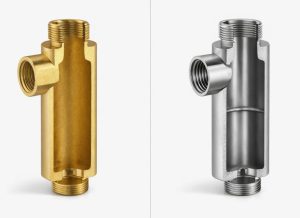
Brass faucets are usually cast. This means hot liquid metal is poured into a mold. It cools down into one solid piece. There are no seams. No joins. This means there are fewer places for water to leak out.
Stainless steel faucets are often made from tubes. Manufacturers take different pieces of pipe. They weld them together. Every weld is a weak spot. Over time, water pressure can push on these joints. If a weld cracks, you have a leak behind the wall.
For the best material for shower mixer manufacturing, casting (brass) wins over welding (steel) almost every time.
5. Finishes and Aesthetics
Maybe you want a Matte Black finish. Or maybe Brushed Gold.
Brass is an excellent base for plating. The finish sticks to it very well. It bonds chemically. This means the black paint or gold plating won’t peel off easily. It stays looking good even after years of hot showers.
This logic applies to more than just taps. When choosing brass vs stainless steel bathroom accessories like towel rails or robe hooks, the same rules apply. Steel accessories are harder to plate. The finish often sits on top like a sticker. It is more prone to peeling off.
Quick Comparison: Solid Brass vs. Stainless Steel
| Feature | Solid Brass (Premium Standard) | Stainless Steel (Standard/Cheap) |
|---|---|---|
| Rust Proof | Yes (Contains no iron) | No (Can develop tea stains/rust spots) |
| Construction | Cast (One solid piece, no leaks) | Welded (Joints can crack) |
| Weight | Heavy (Stable, premium feel) | Light (Can feel wobbly or hollow) |
| Finish Life | Long (Plating bonds deeply) | Short (Paint can chip/peel) |
| Cost | Higher upfront | Lower upfront |
| Lifespan | 15-20+ Years | 2-5 Years |
Conclusion: Is the Extra Cost Worth It?
Let’s look at the numbers.
A homeowner could buy a cheaper steel faucet now. It saves money today. But if it wobbles, rusts, or leaks in three years, it must be replaced. Plus, a plumber must be paid to install it again. That gets expensive.
Or, one can invest in solid brass. It costs a bit more upfront. But it stays beautiful. It stays leak-free. It stays stable for 10 or 20 years.
If building a home to last, do not cut corners on the things touched every day. Go for the heavy metal.
Ready to see the difference quality makes? You can explore the complete range of durable bathroom fittings to find designs that are built to last a lifetime.
Experience the ITAVA Difference
At ITAVA, water is viewed as an experience, not just a utility. As a premier manufacturer of sanitary ware established in 2010, the brand combines over a decade of engineering precision with modern design.
Unlike plain sellers, ITAVA watches every part of the making process. From low-pressure casting to high-grade electroplating, the firm makes sure items meet tough world rules like cUPC, CE, and WaterSense.
Whether giving the right fixtures for a fancy hotel or fixes for a home owner sick of changing heat, ITAVA joins lasting strength with nice style. The firm does not just sell faucets. It builds trusty water send systems made to work well for years. This is why folks around the world count on ITAVA for their hardest bath room jobs.
FAQ
Q1: How can I tell if a faucet is brass or stainless steel?
A: The simple test is weight. Brass is way heavier than steel or zinc blends. If the box feels really heavy, it is likely solid brass. Also, brass is not magnetic, while some weak grades of steel are.
Q2: Does solid brass contain lead?
A: Normal brass holds a small bit of lead for form, but good makers like ITAVA use “Lead-Free” or “Low-Lead” brass (like DZR brass) that fits strict world health rules safe for drinking water.
Q3: Which finish lasts longer on brass?
A: Chrome is the old hard and long-lasting look. But new PVD (Physical Vapor Deposition) finishes like Gold or Gunmetal are very strong and fight marks better than plain paint.
Q4: Can stainless steel faucets be of good quality?
A: Yes, if they come from solid 304 or 316 marine-grade steel, they are fine. The issue is that many “steel” taps in stores are really slim, empty tubes of weak metal that spot easily.
Q5: Why are brass mixers more expensive?
A: It comes from raw material costs and labor. Copper (the chief part in brass) is costly. Also, the casting and shine steps for brass take more time and skill than just joining steel tubes.