

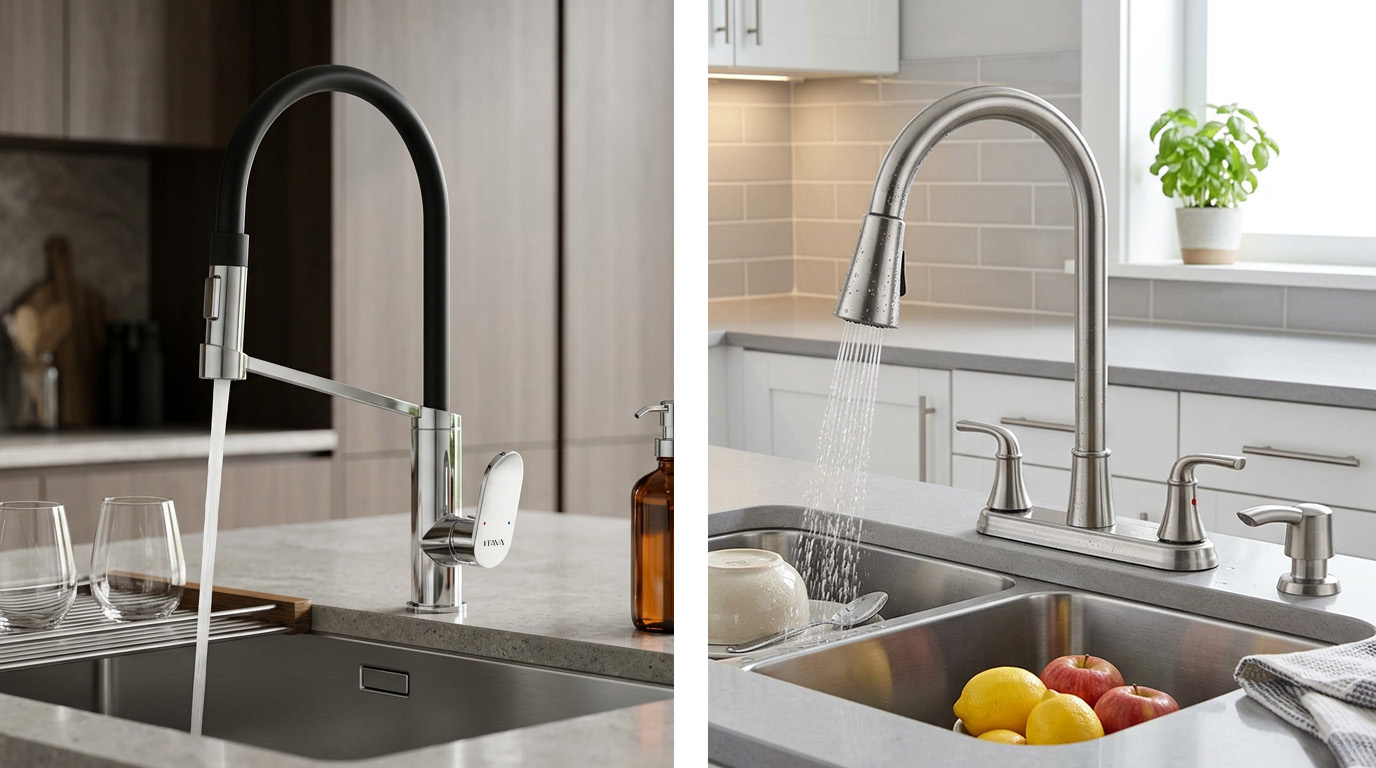
Picking a faucet style sounds like a “later” decision, until you’re mid-cooking with one hand holding a pot and the other trying to dial in warm water. Add greasy fingers, soap on your knuckles, and a sink that always seems to splash, and single lever vs two handle kitchen tap stops being a design debate. It turns into a daily workflow problem.
If you’re sorting options online, ITAVA is a useful reference because the kitchen lineup is organized around real kitchen needs, not random SKUs. The Kitchen Mixers category shows multiple single-lever kitchen mixer models across series, plus a wall-mounted option and even a single cold tap for setups that don’t need mixed water. That makes it easier to match your sink layout and your habits instead of forcing a “one style fits all” choice.
What Is the Real Difference Between One Handle and Two Handles?
At the simplest level, the difference is how you mix hot and cold water, and how many controls sit on the counter. That sounds basic, but it affects speed, cleaning, and how annoying it feels when the faucet starts acting up later. ITAVA’s practical guide frames it the same way: handle design changes, ergonomics, temperature stability, and maintenance patterns.
How a Single Lever Kitchen Mixer Works
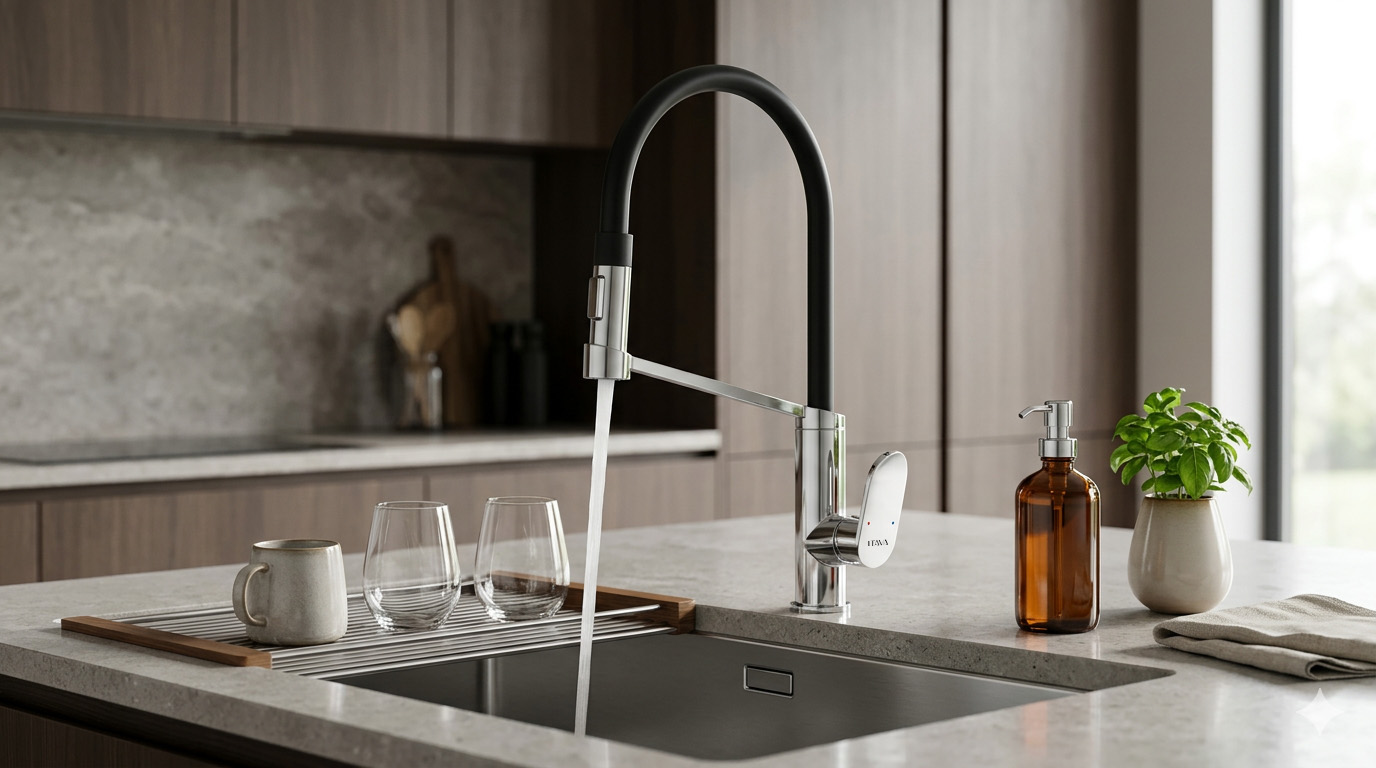
A single lever kitchen mixer uses one lever to control both flow and temperature. Move it one way for hotter, the other for colder, and adjust the flow in the main travel direction. Inside, a cartridge blends hot and cold into one stream. That “one control” design is why it’s popular in busy kitchens.
How a Two Handle Kitchen Tap Works
A two-handle kitchen faucet keeps hot and cold separate. You open each side until the mix feels right, then tweak again when the next task needs a different temp. It can feel more deliberate, sometimes more precise, but it’s also more steps.
Is One-Hand Control Better When You’re Cooking?
This is where the decision gets real. Cooking is full of one-handed moments: lifting a heavy pot, holding a colander, keeping a cutting board from sliding. If the faucet needs two hands to behave, it slows you down in small ways that add up. Not dramatic. Just irritating, like a drawer that always sticks.
Why a Single Lever Kitchen Mixer Feels Faster
Single-handle faucets are generally easier to operate one-handed and faster to set once you get used to the handle’s “map.” ITAVA points out that many users build muscle memory, where a certain angle equals “comfortable warm,” and you hit it without thinking.
For greasy hands, a lever you can bump with the side of your wrist is a quiet win. It’s not fancy. It’s just practical.
When Two Handles Still Make Sense
Two handles can be fine if you cook less, prefer a slower pace at the sink, or simply like the symmetry. Some people also like that you can crack cold slightly, then add hot in tiny increments. That does feel controlled, especially for specific tasks like warm rinses.
Which One Gives You Better Temperature Control?
“Better” depends on what you mean. If you mean ultra-fine hot/cold tuning, two handles often win. If you mean getting to a usable temperature quickly, a good single handle usually feels better in real life. ITAVA calls this out as precision versus repeatability: two handles can fine-tune, while a single-handle tends to be fast and repeatable for most users.
Kitchen Faucet Temperature Control in Real Life
With a single handle, tiny movements can change both flow and temp at once. That’s great when you’re rinsing vegetables or filling a pot with warm water and you want to get on with it.
With two handles, you can creep toward the exact mix, but you also might “hunt” for it again later because the handles don’t land in the same place each time. If your kitchen is chaotic at dinner time, hunting gets old.
Fine-Tuning vs Speed
Two-handle faucets can deliver very granular manual control.
Single-handle faucets can also be precise, but the feel depends a lot on build quality and how smooth the cartridge action stays over time. When a cartridge starts to wear, the handle can feel stiff or jumpy, and the temperature setting becomes less pleasant.
Which One Is Easier to Use With Greasy Hands?
Greasy hands are the truth test. If a faucet looks great but needs fingertip precision, it’s going to annoy you the first time you’re dealing with chicken marinade or frying oil.
ITAVA notes that single-handle designs often concentrate the assembly into a compact footprint with smoother surfaces and fewer nooks, which can reduce mineral buildup points compared with multi-piece setups. That same “less stuff around the base” also makes wiping faster.
Single Handle: Less Hardware to Wipe
One lever usually means fewer edges and fewer tight spots around the sink deck. Quick wipe, done. If you’re the person who hates detail-cleaning around handles, this matters more than you think.
Two Handles: More Places for Grime to Hide
Two-handle setups add extra base areas and seams. In hard water areas, those seams collect mineral spotting faster. It’s not a dealbreaker, but it’s more wiping, and it’s usually the kind of wiping nobody enjoys.
What About Water Pressure Changes and Temperature Swings?
If your household runs the dishwasher while someone is at the sink, or another tap kicks on, you’ve probably felt the water shift. Handle count isn’t the root cause. Plumbing conditions matter more. ITAVA is clear that temperature stability is influenced by installation quality, water conditions, and the overall setup, not just whether it’s single or double handle.
What Helps Most When Pressure Is Unstable
If pressure swings are common, look beyond the handle style. Pay attention to smooth cartridge action, solid materials, and a design that matches your sink holes and clearance. ITAVA specifically recommends prioritizing solid metal bodies and ceramic disc cartridges because internal components have a bigger impact on lifespan than handle count.
Which One Should You Choose for Daily Cooking?
Most busy home kitchens land in the same place: single-handle wins for speed, one-hand use, and simpler cleaning. ITAVA sums it up bluntly: single-handle faucets generally win for ease of use in multitasking kitchens, while two-handle faucets can suit more classic preferences or people who don’t mind extra steps for fine control.
If you want to shop for the style that fits that “one hand is always busy” reality, browse the single lever kitchen mixer.
You’ll also notice the category includes a Wall-mounted Single-lever Kitchen Mixer and a Single Cold Tap, which helps when your sink layout or plumbing plan is specific.
FAQ
Q1: What Is the Main Difference in Single Lever vs Two Handle Kitchen Tap Designs?
A: A single-handle faucet mixes hot and cold through one lever and one cartridge, while two-handle faucets keep hot and cold controls separate and you mix manually at the spout.
Q2: Is a Single Lever Kitchen Mixer Easier When One Hand Is Busy?
A: Yes for most people. Single-handle faucets are usually faster and easier to operate one-handed, which fits cooking and cleanup routines better.
Q3: Do Two Handle Kitchen Faucets Give More Precise Temperature Control?
A: Often, yes. Two handles can allow finer hot and cold adjustments, though high-quality single-handle faucets can still be very precise once you’re used to the handle range.
Q4: Which Style Is Easier to Keep Clean Around the Base?
A: Single-handle designs often have fewer nooks and a more compact footprint, which can make wiping faster and reduce buildup points compared with multi-piece setups.
Q5: Does Handle Style Decide Whether a Faucet Will Leak?
A: Not by itself. Leak risk is more tied to quality, installation, and water conditions. Single-handle faucets concentrate wear into one cartridge, while two-handle designs spread wear across multiple components.