

Large OEM and project orders rarely fail because of a single product flaw. More often, problems start with the supplier. In bathroom projects, a thermostatic shower mixer may look similar on paper across different brands, yet perform very differently once installed at scale. Inconsistent batches, weak cartridge performance, or missing spare parts often show up after handover, when fixes become expensive and slow. That is why selecting the right thermostatic shower mixer supplier matters as much as choosing the mixer itself.
Why Supplier Selection Matters for Hot-Climate and High-Usage Projects
Project procurement is not retail. You do not get to “try another option next time” after hundreds of units are already installed. In hot-climate regions and other high-usage developments, the operating environment can be less forgiving. Higher inlet temperatures, long daily run time, and heavy guest turnover can expose weak internal parts fast.
Where Bad Supplier Choices Hurt the Most
A weak supplier tends to fail in predictable places, and none of them are cheap:
- Inconsistent batches across the same model number
- Late delivery that forces rushed installation
- Missing spare parts when a thermostatic cartridge needs replacement
- Warranty arguments that drag on while rooms stay out of service
Typical Project Scenarios
These are the cases where a reliable thermostatic shower mixer supplier pays for itself:
- Hotels, resorts, and serviced apartments with phased delivery
- New-build residential blocks where consistency across units matters
- Villa projects where multi-outlet shower zones are common
- Mixed teams on site, where clear documentation saves time
What Product Criteria Should Be Vetted First?
Before comparing suppliers, lock down what “good” looks like for your application. Otherwise, every quote looks similar on paper. This is where many buyers lose control of the spec and end up selecting on unit price alone.
Thermostatic Cartridge Performance in High Temperature Operating Environments
In warm supply conditions, inlet temperatures and pressure swings can be less forgiving. You want a thermostatic cartridge that reacts quickly and stays stable, not one that drifts after months of high-cycle use. Ask for test data, not slogans. If the supplier cannot explain how temperature stability is checked, that is already a signal.
A useful question that cuts through sales talk: can the supplier explain how a temperature-controlled valve behaves when cold flow drops suddenly, or when supply pressure changes during peak usage?
Materials and Internal Build Quality
A thermostatic mixing valve can look fine outside and still hide poor machining or weak internal finishes. Materials matter, but so do how the parts are made and inspected. If the supplier claims premium materials, ask for material declarations and batch traceability. It is not exciting. It is what keeps projects from turning into constant maintenance calls.
Flow and Multi-Outlet Support for Project Bathrooms
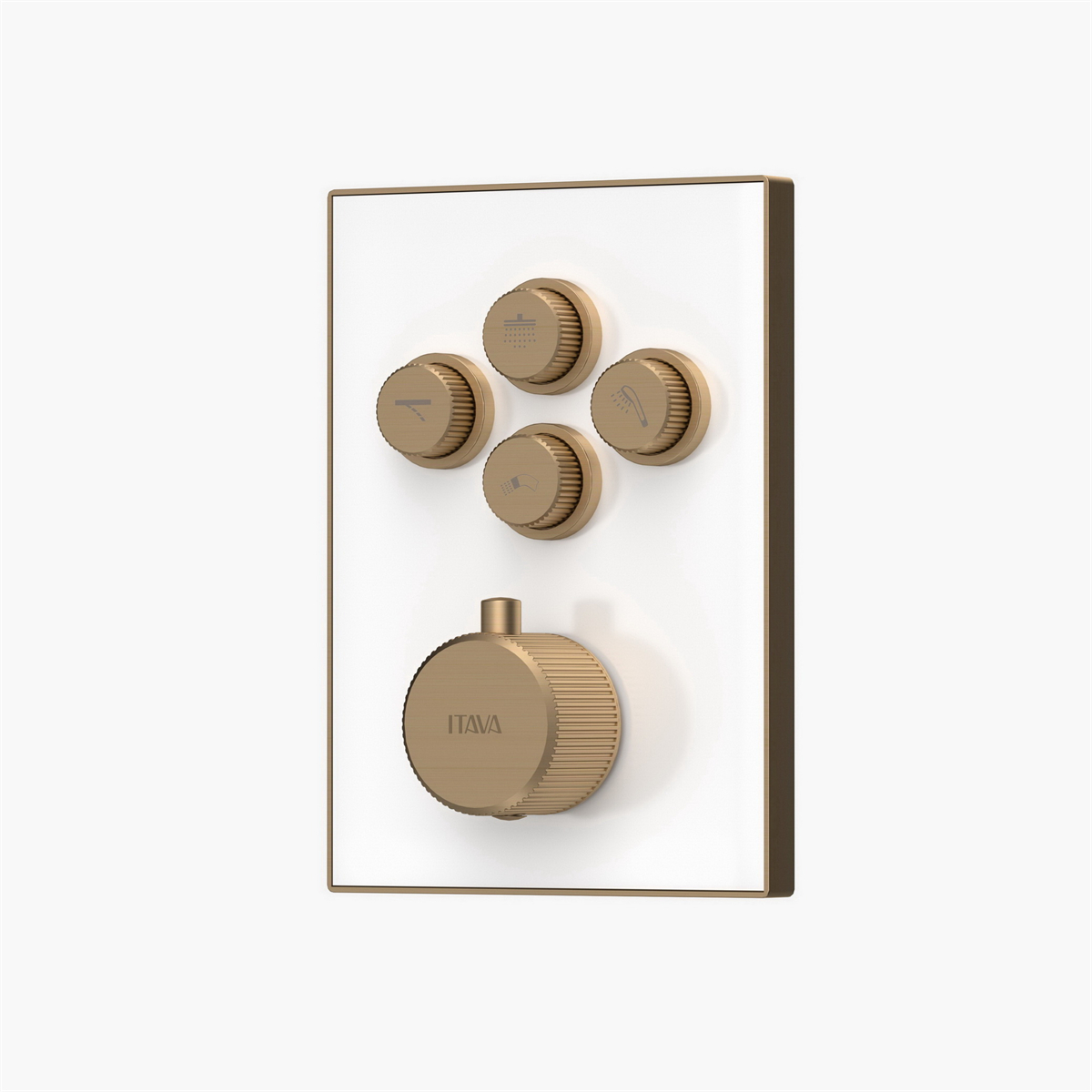
Many projects want more than a single-hand shower. Once you spec a thermostatic shower system with overhead plus hand shower, or additional body jets, you need stable mixing under changing flow conditions. That is not just a trim decision. It is a valve capability decision. Clarify whether the thermostatic shower mixer valve is intended for multi-outlet setups and what the recommended operating range is.
Safety Features That Reduce Risk
In projects, “safe” is not a slogan. It is a liability issue. Look for credible anti-scald valve behavior within the system and confirm how it performs during sudden supply changes. This is also where it helps to compare thermostatic to pressure-balance options, because decision-makers often mix these up.
Here is a quick comparison you can share internally:
| Feature | Thermostatic Shower Mixer | Pressure Balance Shower Valve |
|---|---|---|
| Main control focus | Temperature stability | Pressure balance to reduce swings |
| Response to inlet temperature change | Stronger control | More limited |
| Best fit | Varied users, higher comfort demand | Basic setups with stable supply |
| Common buyer mistake | Treating it as “just a mixer” | Expecting thermostatic-level control |
How to Evaluate Thermostatic Shower Mixer Suppliers
Once you know the product criteria, supplier evaluation becomes simpler. You are no longer “shopping around.” You are checking whether the supplier can deliver your spec repeatedly, at project scale, with support that lasts.
Manufacturing Consistency Across Large Batch Orders
Ask how quality is kept consistent from sample to production, and from one batch to the next. Good suppliers can explain their inspection checkpoints and how they handle non-conforming parts. With mixing valve manufacturers, consistency is the line between a smooth rollout and chaos across hundreds of bathrooms.
Practical signs a supplier takes batch consistency seriously:
- Clear QC checkpoints (incoming, in-process, final inspection)
- Batch records that link materials to finished valves
- A standard approach to sample retention and traceability
- A process for handling defects without “silent changes”
Documentation Quality and Technical Support
A supplier that works well with project teams provides clear installation drawings, service notes, and troubleshooting guidance. This matters even more when multiple subcontractors are involved. Clean documentation reduces installation mistakes and speeds up commissioning, especially for concealed systems and complex layouts.
Lead Time Control and Project Coordination
For project orders, lead time is not a single number. You may need staged deliveries, project labeling, and packaging that supports site logistics. A capable thermostatic shower mixer supplier should be able to talk through realistic timelines, production capacity, and what happens if the schedule shifts.
Suppliers experienced in export-oriented project delivery usually have better answers here, because they have seen phased shipments, port delays, and last-minute scope changes before.
Spare Parts and Service Continuity
This is where many quotes hide the real cost. Ask direct questions:
- How long are spare parts kept available for this model?
- Can service kits be ordered in advance?
- What is the process for replacing a thermostatic cartridge in the field?
If the answers are vague, the after-sales support will be vague too.
What OEM and Customization Options Matter Most?
For an OEM shower mixer program, you are not only buying a function. You are building a repeatable product line for your market. Customization should support that goal, not create endless variations that are hard to manage.

Finishes and Trim Choices That Match Local Preferences
In many high-end residential and hospitality projects, finishes and styling matter. Your supplier should support consistent finishes across batches, plus clear maintenance advice for those finishes. A finish mismatch across phased deliveries is a fast way to upset a developer, even if the valve works perfectly.
Packaging, Labeling, and Batch Control
Project packaging is not glamorous, but it prevents site confusion. For large orders, ask about:
- Batch labels that match your delivery plan
- Protective packaging for long-distance shipping
- Easy identification for installers on site
Sample Validation Before Production
Do not skip the middle step. Request samples, then a small pre-production run if the order is large or the configuration is new. This is where problems show up early, when they are still cheap to fix.
How Should Total Cost Be Judged for Project Bathrooms?
The lowest unit price can look good in a spreadsheet. It can look terrible after six months of real use. A thermostatic product is a system, and the value shows up over time through fewer complaints, fewer replacements, and fewer “quick fixes” that never end.
The Costs That Hit After Handover
These are the costs that often get ignored until they hurt:
- Room downtime in hospitality sites
- Maintenance labor for repeated callouts
- Customer dissatisfaction in premium residential builds
- Replacement delays when parts are not available
One strong thermostatic shower mixer supplier helps you keep those costs under control with stable production quality and long-term parts support.
About ITAVA as a Project-Focused Shower Mixer Partner
ITAVA is positioned for buyers who treat bathrooms as a project system, not a pile of parts. For OEM and project orders, ITAVA emphasizes coordinated bathroom solutions that align with modern design expectations while staying practical for long-term service. That approach supports spec approval across multiple stakeholders, from design to procurement to installation. If your projects demand consistent batches, clear technical documentation, and planning for service parts over time, ITAVA fits the “project mindset” many developers and contractors prefer. It helps you move from one successful phase to the next without re-arguing the basics on every new order.
FAQ
Q1: What is the fastest way to spot a reliable thermostatic shower mixer supplier?
A: Ask for batch consistency proof, clear documentation, and a straight answer on spare parts availability. A good supplier has those ready, not after three follow-ups.
Q2: Is “thermostatic mixing valve” the same thing as a thermostatic shower mixer?
A: The terms overlap. In projects, “thermostatic mixing valve” is often used broadly, while “thermostatic shower mixer” is more specific to shower applications and trim sets.
Q3: When does a pressure balance shower valve make sense instead?
A: It can fit basic bathrooms with a stable supply and lower comfort demands. For mixed-user projects or higher expectations, a thermostatic shower mixer valve is usually the safer bet.
Q4: What should be included in an OEM shower mixer request?
A: Your target market, finish requirements, outlet configuration, expected order volume, packaging needs, and a plan for service parts like the thermostatic cartridge.
Q5: How do you adapt specs for hot-climate, high-usage projects without overcomplicating the order?
A: Focus on what changes outcomes: cartridge stability in warm inlet conditions, material durability, multi-outlet capability, and long-term parts support. Avoid unnecessary cosmetic variations that break batch consistency.