

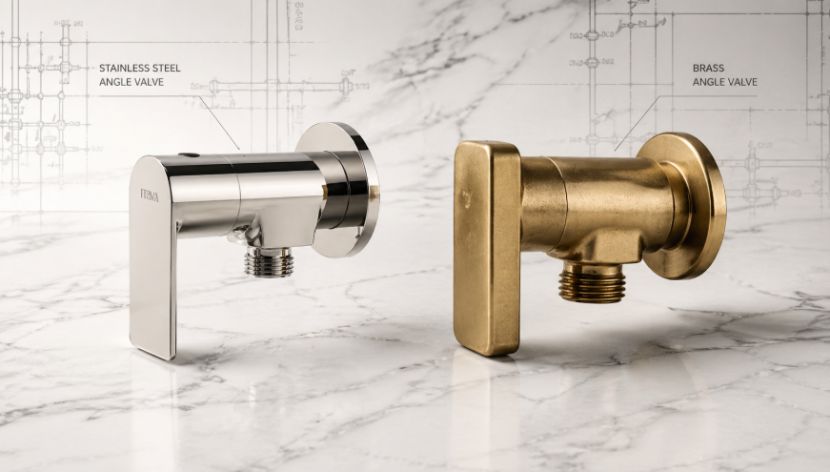
Small parts often cause the biggest headaches. An angle valve is just a tiny piece of metal. But in large buildings, it really controls your whole maintenance budget. Pick the wrong metal, and things go bad fast.
You might deal with burst pipes. Water ruins the floors. And the building managers get really mad. When you pick plumbing materials for big projects, knowing the difference between brass vs stainless steel angle valves is step one to stop costly leaks.
Deep Dive into Brass Angle Valves in Commercial Applications
Brass is the old favorite for pipes. People have used it for a very long time. It feels heavy. It feels solid. The threads screw on easily. For normal homes and small shops, it mostly does a fine job. But new water systems push these old metals too far.
The Clear Advantages of Brass
Plumbers really like brass. Why? Because it bends and shapes without much fighting. Workers can cut clean threads into it. That means the valve seals up tight. You do not have to wrestle with plumbing tape all day long. For huge commercial buildings with hundreds of bathrooms, using normal brass keeps your first costs pretty low. It fits the budget well.
The Hidden Risks and Dezincification
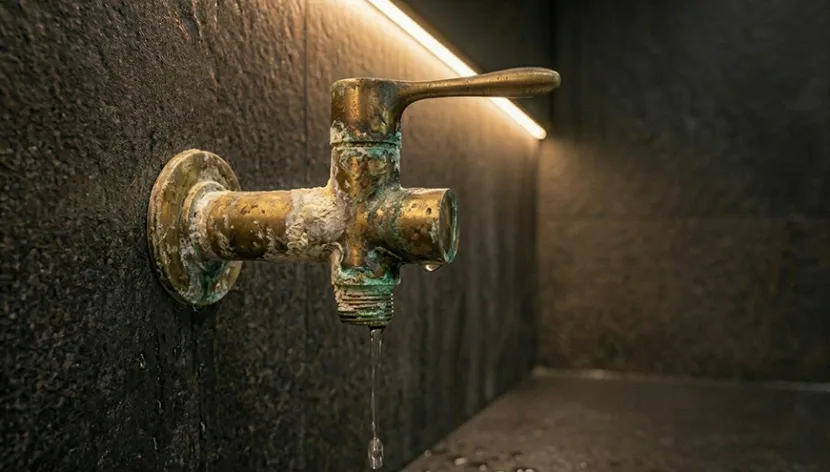
But here is the bad news. Sometimes, standard brass fails. If your town has hard water, brass gets sick. We call it dezincification. The zinc inside the metal just washes away. What is left? A weak, spongy copper shell.
It snaps when the water pushes hard. You save a few bucks on day one. But five years later, a hotel floor floods. That wipes out all the money you saved. For drinking water, you absolutely must use lead-free or DZR (dezincification-resistant) brass.
Why Consider Stainless Steel Angle Valves?
Sometimes brass is just not good enough. When the water or the air is too harsh, stainless steel steps up. It is a tough choice.
Dominating Harsh Environments
Look at metals like 304 and 316 stainless steel. They almost never rust from normal tap water. They handle salty ocean air near the beach. They also survive strong cleaning soaps used in busy hospitals. Stainless steel just blocks rust. It stops hard stuff from sticking to the inside walls. So, the water flows free and clear for years.
The Manufacturing Trade-Offs
But there is a catch. The price is higher at first. Also, stainless steel is very hard to cut. Factories need really strong CNC machines to put threads on it. If a factory uses cheap tools, the threads come out rough. Rough threads ruin the whole plumbing job. Nobody wants to deal with a stuck valve on a Friday afternoon.
Head-to-Head Comparison: Brass vs. Stainless Steel
Seeing the plain facts helps a lot. To help contractors make smart buying choices, a simple cost and life comparison of standard commercial plumbing valves is very useful.
| Feature | Standard Brass | Stainless Steel |
|---|---|---|
| Initial Cost | Low to medium | Medium to high |
| Hard Water Life | About 3 to 5 years | Over 10 years |
| Corrosion | Can suffer dezincification | Fights rust very well |
| Best Fit | Normal buildings, soft water | Hospitals, beach areas, factories |
Overcoming the Hard Water Dilemma
Hard water ruins pipes silently. Calcium and rock stuff in the water love to grab onto rough spots. Over time, this rock layer builds up. You might even see white crust on the outside. It jams the parts inside the valve.
Then, a plumber tries to turn the water off during a leak. Snap! The handle breaks right off. Now you have to shut off the water for the whole floor. A quick fix turns into a huge mess. Contractors working with bad calcium buildup must choose a corrosion resistant angle valve to make modern bathroom fixtures last longer.
Engineering Excellence in Modern Fixtures
Finding good plumbing parts means looking past the basic metal. You need a maker who cares about the inside design. ITAVA fixes these exact supply problems. They are a very open B2B factory. They care a lot about exact sizes and strong metals. Their parts actually survive real, tough use in big buildings.
You never have to guess if their threads fit right. They make parts that handle bad water and loud water hammer hits without breaking. Built to beat crazy water pressure and rock buildup, the ITAVA Heidi Series is the next step up in premium angle valves for today’s big buildings.
The TF-HEI1703-L model uses a smooth quarter-turn ceramic part inside. It drops the old multi-turn rubber washers. Those old rubber things always dry out and leak after a little while. This new way is simply much better.
FAQ
Q1: Is brass or stainless steel better for hard water plumbing?
A: Stainless steel wins for hard water. It stops rock buildup and rust. If you really need to use brass, get DZR brass so it does not rot.
Q2: Do brass angle valves rust over time?
A: Brass does not get red rust like iron. But it does turn green. Worse, it can lose its zinc in bad water. That makes the metal weak from the inside out.
Q3: Why do cheap angle valves fail in commercial buildings?
A: Cheap ones use dirty metals and bad rubber seals. Big buildings have crazy water pressure spikes. Cheap valves just cannot take the hit and they leak fast.
Q4: What is the difference between quarter-turn and multi-turn valves?
A: A quarter-turn valve uses a hard ceramic disc. You just turn it 90 degrees to stop the water. Multi-turn valves use a rubber washer. You have to twist and twist to close it. That rubber breaks down quickly.
Q5: How long should a commercial angle valve last?
A: A good stainless steel or DZR brass valve lasts for 10 to 15 years. It works hard even in tough buildings. A cheap brass one in hard water might die in just 3 years.