

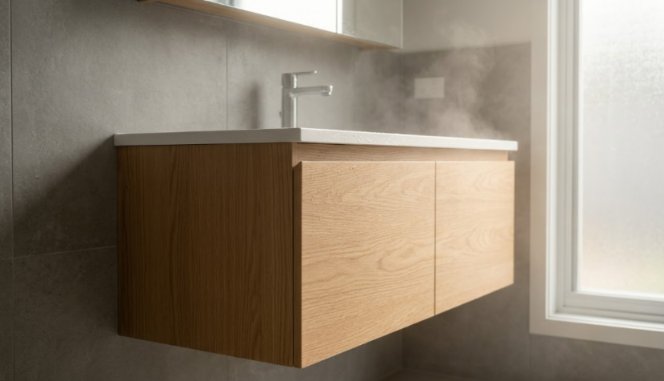
Picture walking into your newly fixed bathroom. The hot shower steam is finally clearing up. Then, you look down at your sink area. You see something really bad. The edge of the cabinet door is peeling off. The paint has ugly bubbles popping up. Seeing warped bathroom cabinet doors hurts. It is a huge headache for anyone owning a house. You spend your hard-earned money to make the room look great. Then, simple water ruins it in a few months.
Think about it. Bathrooms are super tough on furniture. They get super hot and then very cold. Water splashes everywhere from the sink when you wash your face. Thick steam fills the air every single day. A high humidity bathroom environment ruins normal wood furniture very fast. You cannot just buy a nice-looking cabinet from a store window. It needs to handle the wet mess. Buying real waterproof bathroom vanities is the smartest move. It is the only way to keep your money safe. Plus, it keeps the whole room looking brand new for a very long time.
What Is the Best Material for a Bathroom Vanity?
The wood hidden under the shiny paint is super important. It decides exactly how long your cabinet will live. You might see a beautiful sink base on sale. But what if the wood inside soaks up water like a cheap kitchen sponge? It will become total trash in a few short months. Finding good moisture resistant bathroom cabinets means you have to know what is actually inside the heavy box. So, let us look at the normal materials used by builders today. You need to see how they deal with everyday steam and messy splashes before you spend a single dime.
Solid Wood vs Plywood Vanity
Solid wood sounds fancy and costs a lot of money. It has nice lines and feels really strong. Many people love the heavy feel of real trees. But solid wood actually breathes. It swells up big when the room gets wet. Then, it shrinks down when the air gets dry again. This back-and-forth movement is bad for the furniture. It makes the corners crack open. It makes the pretty paint split over time.
Plywood is made in a totally different way. It uses many thin layers of wood glued tightly together. The lines of the wood go in opposite ways. This special crossed design stops the wood from moving around. For a wet room, a thick plywood box is much safer than pure solid wood. It just stays put.
MDF and Particle Board
You will see MDF and particle board in so many large stores. Why? Because they are super cheap to make in factories. They are basically just glued sawdust and small wood shavings. The big issue here is water. If water finds a tiny scratch, bad things happen fast. If an edge is not sealed right, the material drinks the water up. The board gets fat and loses all its solid strength. Once it puffs up, it never shrinks back down to size. It stays ugly forever. If you want your bathroom setup to last a long time, stay far away from the super cheap stuff.
PVC
PVC is pretty much just hard plastic. It totally ignores water. It cannot soak up a single drop, no matter what you do to it. It is entirely waterproof on the inside and the outside. The bad part is how it looks to the eye. Some PVC cabinets look really cheap. They might feel flimsy and weak compared to heavy, real wood. You have to look really hard to find a good PVC one. You want one that feels heavy and looks like natural wood. You definitely do not want your nice bathroom to look like cheap outdoor patio furniture.
Finishes Act as the Invisible Shield
The wood core always needs a thick raincoat. That raincoat is the finish put on the very outside. A great finish locks the weak core away from the wet air. You could have the best solid core in the whole world. But if the paint job is bad, water will still sneak inside. The outside cover changes everything. It is what actually fights off the wetness day after day.
Thermofoil
Thermofoil is a thin plastic sheet. Big machines heat it up and suck it tightly onto the wood core. The best thing about it is the smooth wrap. There are no lines or small breaks. The plastic stretches right over the front face. It wraps around the sides of the door perfectly. Because there are no open cracks, water has nowhere to hide. It acts as a super strong wall against wetness. Just remember one easy rule. Keep hot hair dryers and curling irons away from it. High heat can make the thin plastic melt and bubble up.
Laminates and Melamine
These are tough plastic stickers glued fast to the wood base. They do not scratch easily when you rub them. You can wipe them clean in just a few seconds. But laminates have one big weak spot. That spot is the sharp edge. Water loves to sneak into the tiny line where the front piece meets the side piece. Good bathroom cabinet edge banding is a huge deal here. It is super important. If the factory uses weak glue on those edges, you are in big trouble. The hot steam will loosen the glue. Then, the whole top layer will peel right off.
Polyurethane and High-Quality Paint
Painting a bathroom cabinet is hard work. It is never just a fast spray from a can. It needs many thick layers of base paint. Then it needs really good color paint on top. Finally, it needs a clear topcoat to seal all the tiny wood holes. This clear coat is often called polyurethane. This slow process takes a lot of time. It costs more money too. But a thick, painted cabinet handles daily water splashes so well. Plus, you can pick any paint color in the whole world.
Smart Design Features That Beat Moisture
Wood parts and paint colors are just the start of the story. How the box is put together matters a ton. How it sits in your room changes how long it lives. Sometimes, a tiny change in the shape saves the whole thing from rotting away. You should look for smart shapes. Good shapes keep the weak spots far away from the wet water puddles on the floor.
Floating Bathroom Vanities
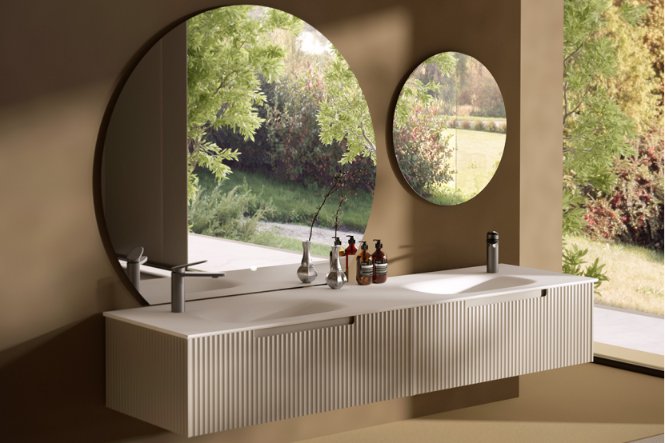
Lifting the whole cabinet off the floor is a massive help. Floating bathroom vanities never sit on wet floor tiles. What if a pipe bursts underneath? What if your kid drops a huge cup of water? The wood stays totally dry up high on the wall. Plus, it makes cleaning so much easier for you. You can mop the dirty floor in a flash. There are no annoying wooden legs to clean around anymore.
Countertop Overhang
Look really closely at the sink top. Look at how it sits on the wood box. The top piece should stick out a tiny bit past the doors below. It should stick out past the drawers too. Just one inch of extra room is perfect. This small thing works like a roof on a house. When water splashes, it falls straight down onto the floor. It stops the dirty water from running down the front of your nice painted doors.
Finding a Durable Bathroom Vanity for Your Home
Nobody wants to deal with peeling paint. Swollen wood doors are the worst thing to wake up to. You just want a durable bathroom vanity that looks amazing. You want one that survives real, messy life every day. This is exactly what ITAVA does best. They make beautiful bathroom cabinets just for wet, busy spaces. They do not take bad shortcuts. They refuse to use cheap particle board that swells up fast. Instead, they use strong core parts. They use top-tier covers that block out the wet air completely. You get a super modern look for your house. But you skip the constant worry of bad water damage. It is the perfect mix of great style and heavy-duty strength. You can just relax and feel good every single time you step out of the hot shower.
FAQ
Q1: How do you protect bathroom cabinets from water damage?
A: Start by turning on the ceiling fan. Do this every single time you take a shower. Leave it running for 30 minutes after you get out. If water splashes on the doors, wipe it off right away with a towel. Grab a dry rag and dry the top parts. Also, check the glue line near your sink bowl. Check it every few months. Make sure no water is leaking down the back part of the wood base.
Q2: Is a bathroom vanity supposed to be flush with the wall?
A: Yes, it should be very tight. The back of the wooden box and the top piece must sit flat against the flat wall. You have to put a neat line of waterproof glue along the back edge. Do this right where the top meets the dry wall. This stops stray water from sliding down the back. If water gets back there in the dark, nasty mold will grow fast.
Q3: Can you paint a vanity to make it waterproof?
A: Paint alone cannot save cheap, sponge-like wood. It will not make it totally waterproof. But, it does add a really strong shield. If you decide to paint it yourself at home, you must use a strong base primer. Then, you have to finish it with a clear, water-safe topcoat. This clear shiny layer is what actually locks out the wet air.
Q4: Why do my bathroom cabinet doors keep warping?
A: Warping happens when wood drinks wet air in a weird way. If the inside part of the door has no paint, it acts differently than the outside face. The bare wood swells up big. It pulls the whole door out of its normal flat shape. Buying units made of strong plywood helps a lot. Getting ones covered tightly in plastic film helps stop this annoying bending too.
Q5: Do floating vanities save space?
A: They do not give you extra drawers to put your things in. But, they trick your eyes. They make a tiny bathroom feel huge and open. Because you can see the bare floor under the wooden box, the room looks wider. It feels way more open and free when you walk inside.