

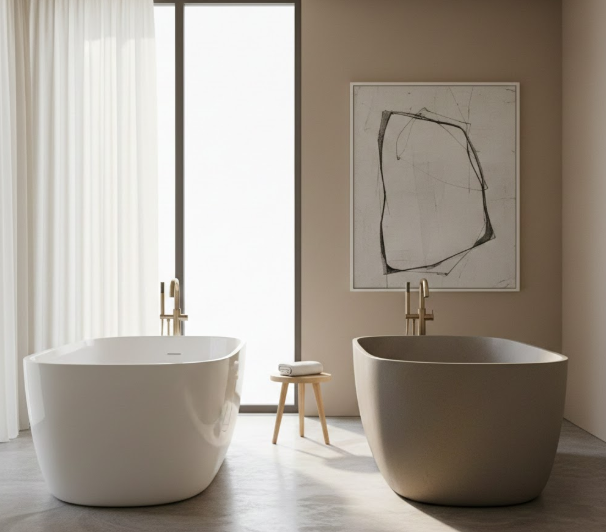
If you are choosing a freestanding bathtub, the biggest question is often the material. Many people begin with one clear search: best material for a freestanding bathtub. The truth is simple. There is no single “perfect” answer. It depends on what you want over time. It also depends on your daily habits, your water quality, and how much upkeep you can accept.
In real projects, the comparison usually comes down to acrylic vs solid surface freestanding bathtubs. Both can look great at first. Both can feel comfortable on day one. However, long-term use is where the gap shows up. And it shows up fast.
What Is an Acrylic Freestanding Bathtub?
An acrylic freestanding bathtub is commonly made from an acrylic sheet. The sheet is heated, then shaped in a mold. After that, the back side is often strengthened with fiberglass and resin. This layered build keeps the tub light. It also helps keep the price in a friendly range. That is why acrylic is so common in homes, apartments, and many remodels.
How Acrylic Bathtubs Are Made
Most acrylic tubs start with a smooth acrylic outer layer. Then the sheet is formed into shape. Next, reinforcement is added. Fiberglass and resin improve stiffness. They also help the tub keep its form. The result is a tub that is easier to carry, easier to position, and often simpler to install.
Typical Benefits of Acrylic
Acrylic is popular for very practical reasons. It is lightweight. That makes moving and handling easier, especially in upstairs bathrooms. It is also often more budget-friendly. The surface can look bright and clean, particularly in white finishes. For many buyers, that combination is enough. It works well when the tub will not face heavy, daily use.
Common Limitations in Long-Term Use
Over long-term use, acrylic may show wear sooner. Fine scratches can appear. This happens when tools are too rough or when grit gets rubbed across the surface. Some tubs may also develop a dull, hazy look over time. This is more common in hard-water areas. Color changes, such as yellowing, are not guaranteed. Still, they can happen. Water quality, sunlight, cleaning products, and factory quality all play a role.
Repair is another issue. Light marks may be reduced. But when damage is serious, it is often hard to “fix” the surface so it looks truly new again.
What Is a Solid Surface Freestanding Bathtub?
A solid surface freestanding bathtub is made from a man-made stone-like material. It is usually more uniform throughout, rather than a thin outer layer with a backing. Many solid surface tubs have a smooth, pore-free surface. That matters. It can help reduce trapped grime. It can also make regular wiping feel easier. This material is often chosen for bathrooms where a stable look and a premium feel matter for years.
Solid Surface Material Explained
Solid surface is designed to be dense and consistent. The finish often feels soft and even. Because it is commonly described as a pore-free surface, it tends to resist “stuck-on” dirt and soap film. That does not mean it cannot scratch. It can. But it usually supports a steady routine with gentle tools and good rinsing.
Why Solid Surface Is Often Chosen for Premium Bathrooms
Solid surface is often used in minimalist bathrooms. It fits clean lines and simple layouts. It also tends to feel more solid during use. The weight and density help with that. Over long-term use, many owners like that the surface’s look stays more consistent. It also fits well when the tub is meant to be a calm centerpiece in an open layout.
Trade-Offs to Consider
Solid surface tubs can be heavier. That can increase shipping and handling needs. It can also affect installation planning. Cost is usually higher than acrylic. These are normal trade-offs. Many buyers accept them because they want better durability and stronger long-term appearance.
Acrylic vs Solid Surface: Key Differences That Matter Over Time
The key differences are not just “cheap vs expensive.” They show up after years. Scratches, surface haze, color stability, and repair options shape the long-term experience. The table below gives a quick snapshot. After that, we will break down each point in plain terms.
| Feature | Acrylic Freestanding Bathtub | Solid Surface Freestanding Bathtub |
|---|---|---|
| Material structure | Acrylic sheet with fiberglass backing | Homogeneous solid surface material |
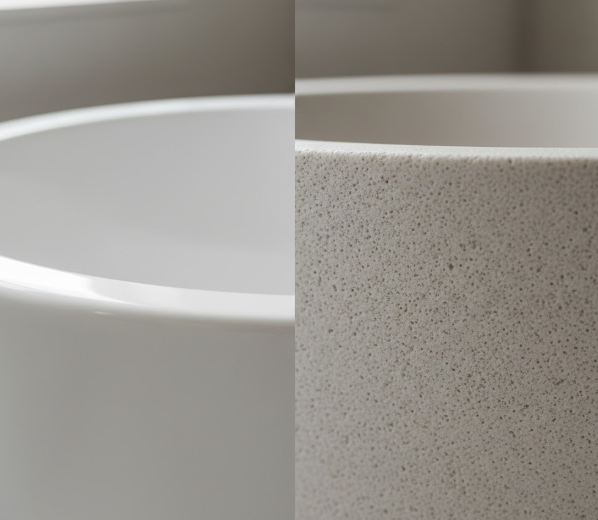
| Surface feel | Smooth, often glossy | Smooth, often matte/soft-touch |
| Scratch risk | Fine scratches show easier over time | Better resistance; minor marks can be refinished |
| Color stability | May yellow or haze with age | More consistent appearance long-term |
| Heat retention | Moderate | Often better due to material density |
| Stability | Lightweight; can feel less “anchored” | Heavier; more stable feel |
| Cleaning style | Needs gentle tools; avoid abrasives | Pore-free surface; gentle routine works well |
| Repairability | Deep damage usually not repairable | Light scratches can often be repaired/refinished |
| Long-term value | Lower upfront cost, higher aging risk | Higher upfront cost, stronger long-term durability |
Surface Durability and Scratch Resistance
If you want a tub that keeps a clean look, scratch behavior matters. Acrylic can scratch more easily. It can also show fine lines under strong light. This often happens when people scrub too hard. It also happens when grit is dragged across the surface.
Solid surface usually handles daily contact better. Small marks may also be easier to improve with the right care method. Still, both materials benefit from gentle tools. Use a microfiber cloth. Use a non-abrasive sponge. Avoid rough pads.
Color Stability and Aging
Acrylic may show aging as haze, dullness, or a slight color shift. This risk goes up in bathrooms with strong sunlight or hard water. It also goes up when harsh cleaners are used often.
Solid surface tends to keep a steadier look. That is especially true when you rinse well and keep cleaners mild. If long-term appearance is your top goal, this category often favors a solid surface.
Heat Retention and Bathing Comfort
Heat retention changes how a bath feels. Acrylic can feel comfortable, but it may lose heat sooner than denser materials. Solid surface often holds warmth better due to its density. That can support longer soaking. If you take long baths often, this difference can feel bigger than expected.
Structural Feel and Stability
A light tub can be easier to install. But it may feel less “grounded” depending on the design and floor conditions. Solid surface is heavier. Many people describe it as more stable. In open layouts, that stable feel often matches the visual weight of the tub as a centerpiece.
Maintenance and Cleaning Over the Years
Long-term use is not only about material. It is also about daily life. Cleaning habits matter. Water quality matters too. The goal is simple. Keep the finish looking even without turning cleaning into hard work.
Daily and Weekly Cleaning Differences
For acrylic, the rule is gentle contact. Avoid abrasive scrubbers. Wipe with a microfiber cloth. Use a non-abrasive sponge when you need more lift. Rinse well. Then dry. This helps reduce water spots and surface film.
For a solid surface, the routine is similar. Still, the pore-free surface can make wiping feel easier. Mild soap and water can often handle daily needs. For weekly care, gentle cleaners and thorough rinsing usually work well. The main rule is the same for both materials. Avoid grit. Avoid harsh tools. Be extra careful around the base and the drain area.
Repair and Refresh Options
Small marks happen over time. With acrylic, deep scratches are difficult to hide. Light marks might be reduced, but serious damage often stays noticeable.
Solid surface often gives more room for refreshment in many cases. Minor scratches may be improved with the correct method, as long as you follow the material guidance. This repairability is a major reason some buyers choose solid surface for long-term use.
Cost vs Value: Short-Term Savings or Long-Term Return?
Acrylic usually wins on upfront cost. It also reduces handling effort because it is lighter. For many buyers, that is a strong advantage.
But value is not only about day-one price. Think about years of use. Think about how the tub looks later. Think about how much care it needs. Also think about what happens if it gets scratched. If you expect heavy daily use, solid surface often offers stronger long-term value.
Which Material Fits Long-Term Use Better?
So, the best material for a freestanding bathtub is not one fixed answer. It depends on what you want most.
If you want a lighter tub and a lower starting cost, an acrylic freestanding bathtub can fit well. It is a common choice for standard home bathrooms. And many fix-up jobs.
If you care most about long-term looks, steady feel, and the chance to fix small surface marks, a solid surface freestanding bathtub often fits long-term use better. It is also a strong match for simple bathrooms where the tub is a main visual part.
When a Solid Surface Freestanding Bathtub Makes More Sense
Solid surface often makes more sense when you plan to stay in the home for years. It also fits bathrooms designed for a clean, high-end look. It works well in open layouts too, because the tub is seen from many angles. If you want easy daily wiping, a consistent finish, and less visible aging over time, solid surface is often the safer pick.
ITAVA Solid Surface Freestanding Bathtubs
ITAVA designs freestanding bathtubs for modern, minimalist bathrooms with clean lines and practical comfort. The TBF-06 uses Material: Solid surface and features a smooth, pore-free surface that supports easy care. It also integrates an Overflow and reliable Pop-up drainage, so the design stays simple while improving daily use. The Size: 1600700560mm works well by a window or as a calm focal point in an open layout.
FAQ
Q1: What is the best material for a freestanding bathtub?
A: It depends on your long-term priorities. Acrylic can be lighter and more budget-friendly. Solid surface often keeps a more consistent look over time and may be easier to refresh if minor marks appear.
Q2: Which freestanding bathtub material lasts longer?
A: In many long-term use settings, solid surface tends to keep its look longer. Acrylic can last well too, but it may show fine scratches or surface aging sooner.
Q3: Do solid surface bathtubs scratch easily?
A: They can scratch if grit is rubbed across the finish. Still, they often handle daily use well. Gentle tools and good rinsing help a lot.
Q4: Can you repair scratches on acrylic or solid surface bathtubs?
A: Acrylic is harder to repair if the scratches are deep. Solid surface may allow minor scratches to be improved with the right care method, depending on the finish and guidance.
Q5: Which material is easier to clean for long-term use?
A: Both can be easy to clean with mild products. Solid surface often feels simpler to wipe because the surface is pore-free, while acrylic needs extra care to avoid abrasive tools.