

For bathroom cabinets for importers, common bathroom cabinet quality problems are not small after-sales notes. They can turn into returns, delayed installation, damaged showroom trust, and awkward calls with project clients. In a bathroom vanity bulk order, one weak hinge is annoying. Fifty weak hinges are a business problem.
ITAVA focuses on customized kitchen and bathroom products, with bathroom cabinet options covering LED mirror bathroom cabinet designs, quartz countertop bathroom cabinet models, artificial stone bathroom cabinet styles, aluminum alloy bathroom cabinet structures, single basin bathroom cabinet layouts, and double basin bathroom cabinet solutions.
Its bathroom cabinet range is built around high-end design, complete bathroom collections, custom finishes, and project-style product matching, which makes it relevant for hotel bathroom cabinets, apartment bathroom cabinets, luxury bathroom cabinets, and modern bathroom cabinets used by importers, wholesalers, and contractors.
Why Do Bathroom Cabinet Problems Matter for B2B Buyers?
Bathroom cabinet problems affect more than the cabinet itself. If you supply a hotel, apartment block, or retail chain, bathroom vanity quality issues may slow handover, increase repair visits, and make buyers question your bathroom cabinet supplier choice. A cabinet installed in a dry showroom may look fine, but a real bathroom is damp, steamy, and not always gently used.
Small Bathroom Cabinet Defects Can Become Batch Claims
Bathroom cabinet defects often repeat across the same production batch. A poor bathroom cabinet finish may lead to bathroom cabinet peeling, bathroom cabinet bubbling, and bathroom cabinet paint cracking across many units. That is why bathroom cabinet inspection should start with bathroom cabinet sample approval, not after the container arrives.
What Causes Bathroom Cabinet Swelling and Warping?
Bathroom cabinet swelling and bathroom cabinet warping usually start when water enters weak edges, sink cutouts, screw holes, or back panels. The reference material notes that cabinet doors and edges can bulge, deform, stick, or fail to close when long-term humidity, splashing, unsealed edges, drain leaks, or poor ventilation are present. It also recommends moisture-resistant plywood over low-grade board when the core has softened.
Check the Core, Edges, and Wet Zones
Before bathroom cabinet mass production, ask for clear details about board type, edge sealing, back panel treatment, and basin-hole protection. A moisture-resistant bathroom cabinet or waterproof bathroom cabinet is not just a sales phrase.
You should check whether the bottom board, sink area, and wall-facing back are protected. A swollen bathroom vanity cabinet often begins from a tiny area nobody checks. It is usually near plumbing, which is not a glamorous detail, but it matters.
How Can Buyers Spot Surface Peeling and Paint Cracking?
Surface issues are easy to miss in photos. Bathroom cabinet peeling may look like a small lifted edge. Bathroom cabinet bubbling may look like a tiny blister. Bathroom cabinet paint cracking may start near corners, drawer fronts, or countertop joints.
The reference article connects peeling, bubbles, white marks, lifted laminate, weak bonding, humidity changes, harsh cleaners, scratches, and prolonged water exposure. It also notes that large delamination often needs panel replacement rather than simple repair.
Sample Approval Should Be More Than a Pretty Photo
During bathroom cabinet sample approval, check the bathroom cabinet finish under strong light. Run your hand along the corners. Open drawers. Look for glue lines. Ask whether the same paint, film, laminate, or veneer will be used in bathroom cabinet mass production. For bathroom cabinets for wholesalers, color and surface control decide whether the product looks “premium” or just acceptable.

Why Do Hinges, Drawers, and Countertops Fail?
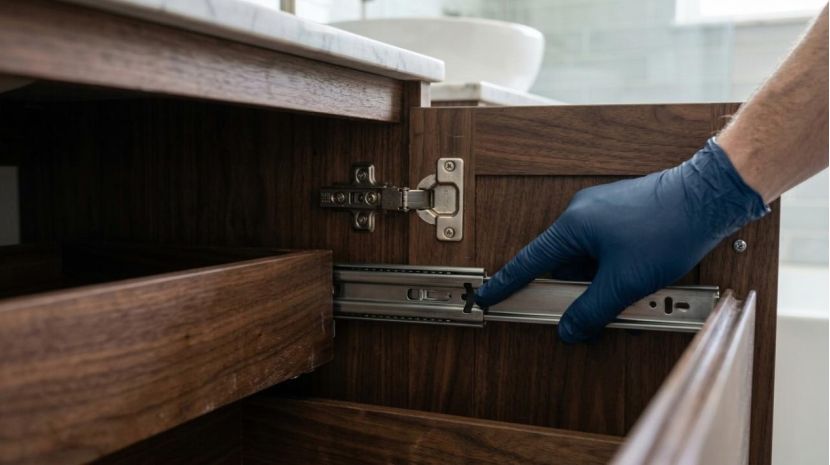
Bathroom cabinet hardware is small, but buyers notice it fast. Bathroom cabinet hinges, soft-close hinges, bathroom vanity drawers, and weak drawer slides affect daily use.
The reference guide lists crooked doors, sagging doors, failed soft-close parts, loose hinge screws, hinge misalignment, humidity deformation, worn hinges, and failed dampers as common causes. It also recommends corrosion-resistant hardware such as stainless steel or nickel-plated options.
Countertop and Sink Areas Need Extra Attention
A bathroom cabinet countertop should sit flat and feel stable. Bathroom vanity countertop damage often starts around the sink. Sink gap water damage may show as cracks, discoloration, mold, swelling under the sink, or water leaking into drawers. In project bathroom cabinets, quartz and artificial stone can help with a cleaner look and easier care, but the sealing work still has to be right.
How Can Buyers Avoid Mirror, Color, and Packaging Problems?
LED mirror cabinet defects can include uneven light, weak switches, mirror scratches, poor wiring, color temperature difference, and edge sealing problems. For an LED mirror bathroom cabinet, mirror cabinet electrical testing should happen before shipment, not after installation. A quick power test is cheap. A replacement mirror in a hotel corridor is not.
Control Color and Export Packaging Before Loading
Bathroom cabinet color mismatch becomes very visible in hotel bathroom cabinets and apartment bathroom cabinets. Ask for batch color boards, production photos, and model labels.
For bathroom cabinet packaging damage, do not accept vague answers. Bathroom cabinet export packaging should include corner protection, foam, mirror protection, moisture control, strong cartons, and clear marks. Export packaging for bathroom cabinets should also match container loading reality, not just sample-room packaging.
How Can Buyers Build a Bathroom Cabinet Quality Checklist?
A bathroom cabinet quality checklist should cover material, sealing, surface, color, bathroom cabinet hardware, countertop stability, mirror function, and packaging. For bathroom cabinet pre-shipment inspection, check at least random units from different cartons. Open doors. Slide drawers. Test lights. Press around the sink area. Small boring steps, yes, but they save money.
Choose the Right Bathroom Cabinet Supplier
A reliable bathroom cabinet manufacturer should show stable samples, clear material choices, consistent finishes, practical packaging, and responsive project support. For custom bathroom cabinets, compare more than price.
Check whether the supplier can support bathroom cabinets for contractors, bathroom cabinets for importers, and bathroom cabinets for wholesalers with the same level of control.
FAQ
Q1: What Are the Most Common Bathroom Cabinet Quality Problems?
A: Common bathroom cabinet quality problems include swelling, warping, peeling, bubbling, weak hinges, poor drawers, countertop damage, mirror defects, color mismatch, and packaging damage.
Q2: Why Does Bathroom Cabinet Swelling Happen?
A: Bathroom cabinet swelling usually happens because moisture enters unsealed edges, sink gaps, back panels, or low-quality board cores.
Q3: How Can Buyers Avoid Bathroom Cabinet Packaging Damage?
A: Ask for bathroom cabinet export packaging photos, corner guards, mirror protection, moisture-proof packing, pallet plans, and container loading photos.
Q4: What Should Be Included in a Bathroom Cabinet Quality Checklist?
A: A bathroom cabinet quality checklist should include material, edge sealing, surface finish, hardware, drawers, countertop, LED mirror function, color, and export packaging.
Q5: How to Choose a Reliable Bathroom Cabinet Supplier?
A: Choose a bathroom cabinet supplier with stable samples, clear materials, project experience, custom bathroom cabinets, strong packaging, and consistent pre-shipment inspection.